
Working with what you have
Can limitations open up new ways of seeing?

One of the first self-taught art exhibitions I ever went to in Chicago featured Mose Tolliver (1925-2006).
It wasn’t in a museum. It wasn’t even in a proper gallery.
It was in the living room space of painter Roger Brown’s Chicago home and studio on Halsted Street.
The moment I stepped through the door, I felt slightly disoriented.
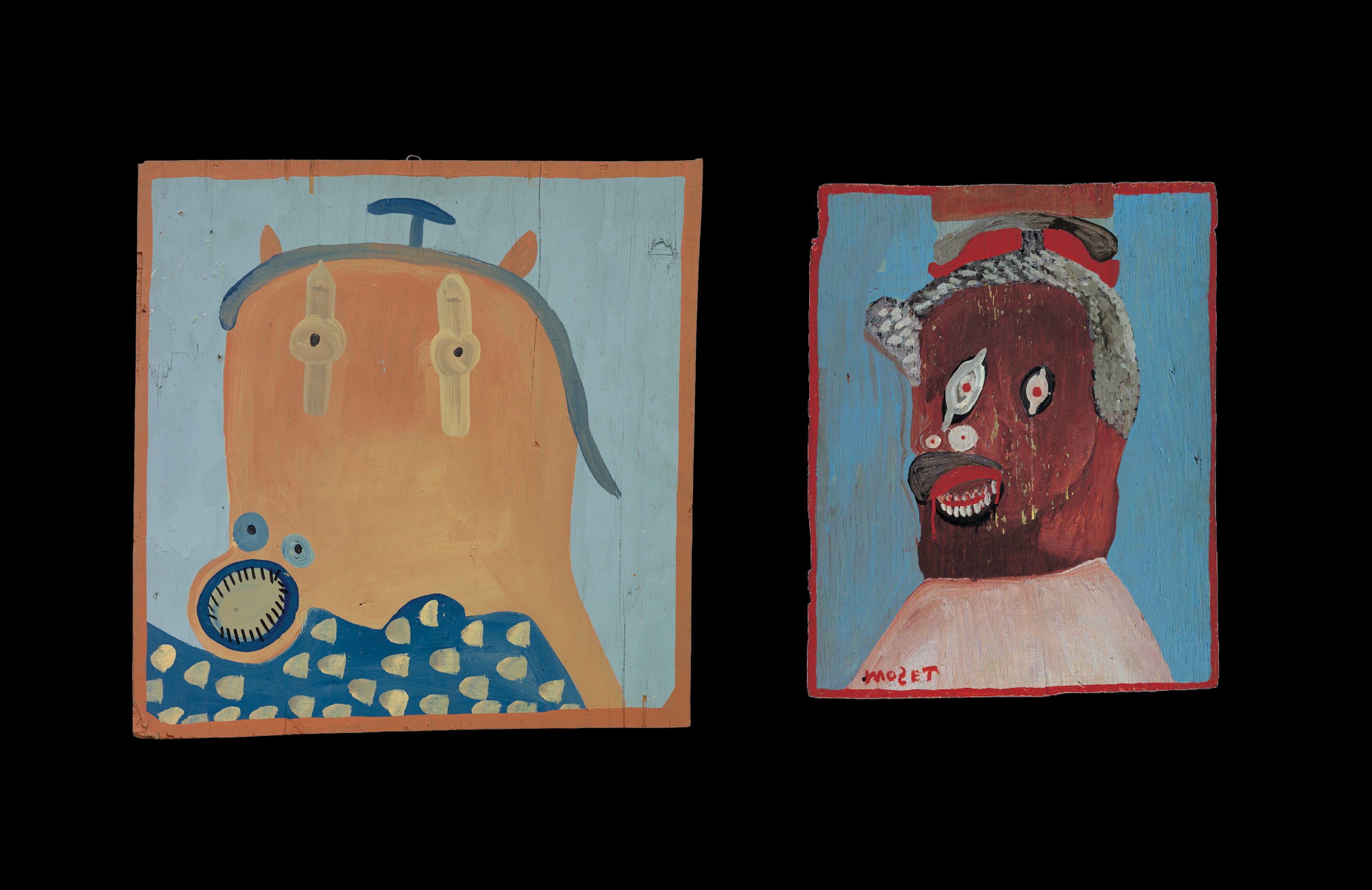
The room pulsed with color and a strange visual energy I had never encountered before.
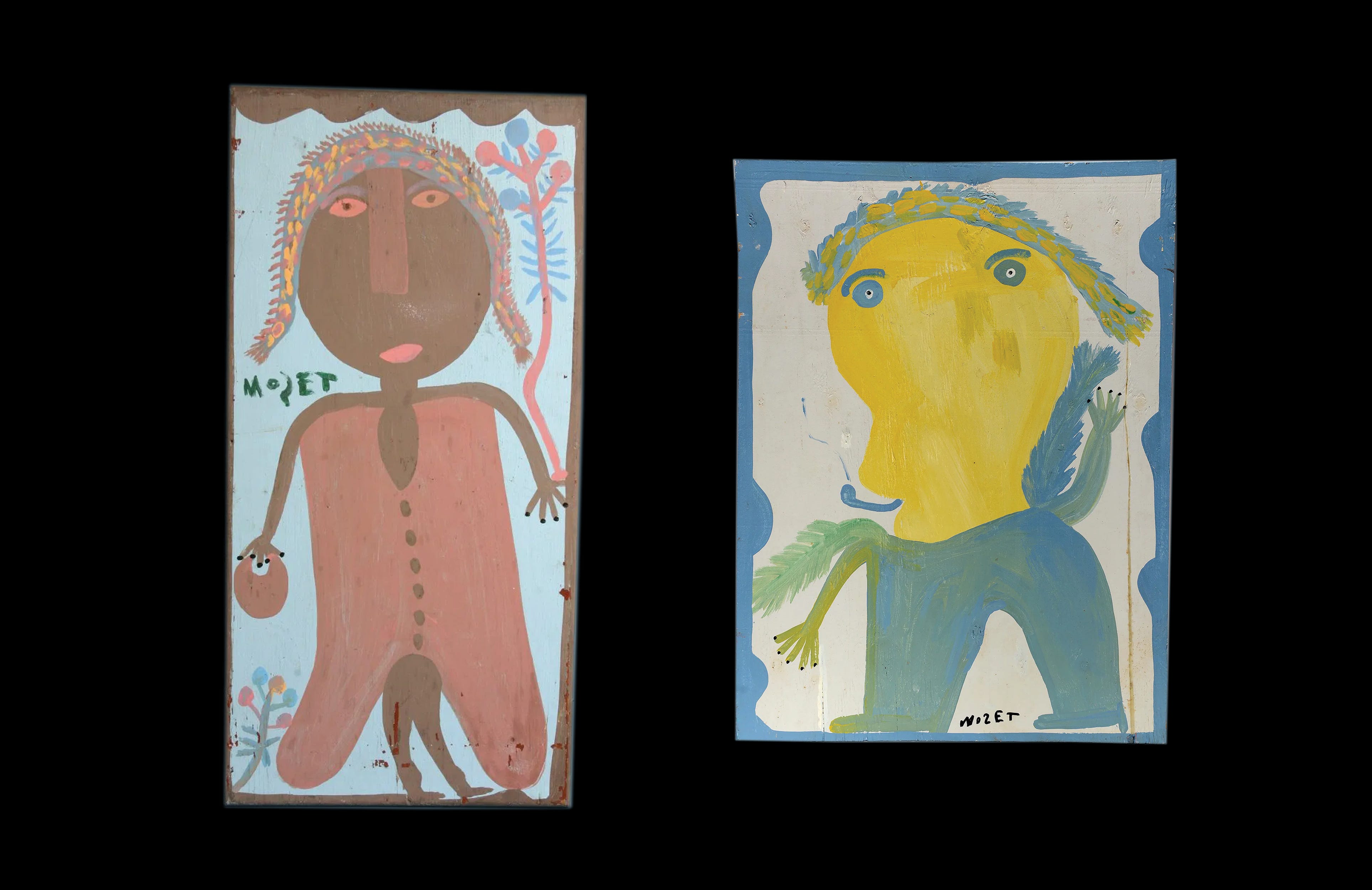
Painting after painting covered the walls—alive with unusual palettes, simplified figures, expressive brushwork, and compositions that seemed to push against their own edges.
For a long time after, I couldn’t stop thinking about the show.
I couldn’t fully explain why the work stayed with me. I only knew it felt unlike anything I had been taught to expect from art.
Looking back, I realize that the exhibition taught me something I would later encounter constantly in design and creative work—strong ideas often emerge from limitation, not abundance.
In Tolliver’s case, those constraints weren’t theoretical.
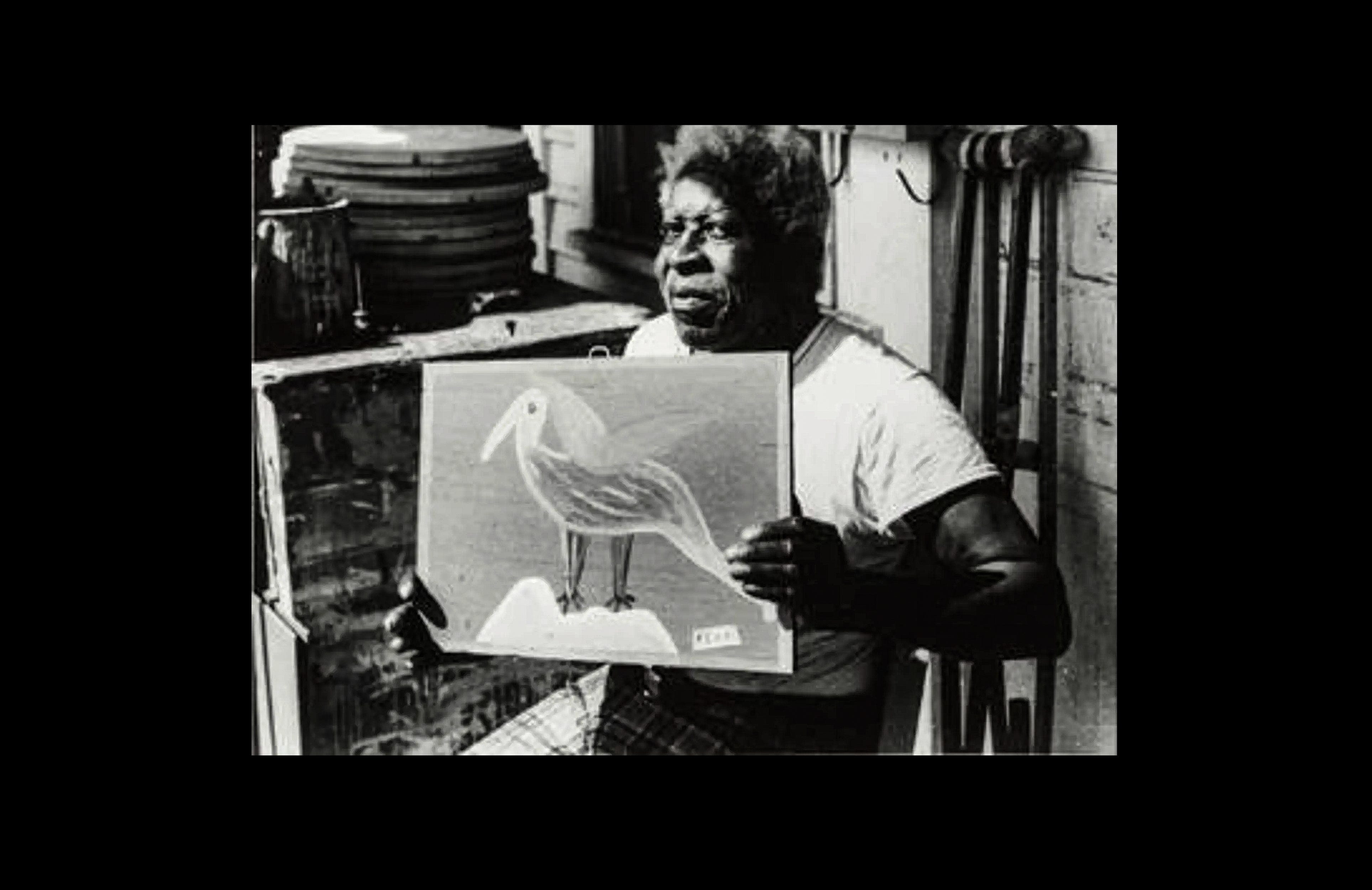
Mose Tolliver wasn’t part of the traditional art world. He grew up the child of sharecroppers in rural Alabama and spent years working in a furniture factory.
Art school, galleries, museums—none of that was part of the path.
Everything changed after a serious accident at work, when a load of rock fell from a forklift and crushed his legs. Unable to stand without crutches, Tolliver began painting while sitting on his bed, balancing boards across his knees and rotating them as he worked.
His materials were whatever he could find. That often meant discarded house paint, scraps of wood, and old boards.
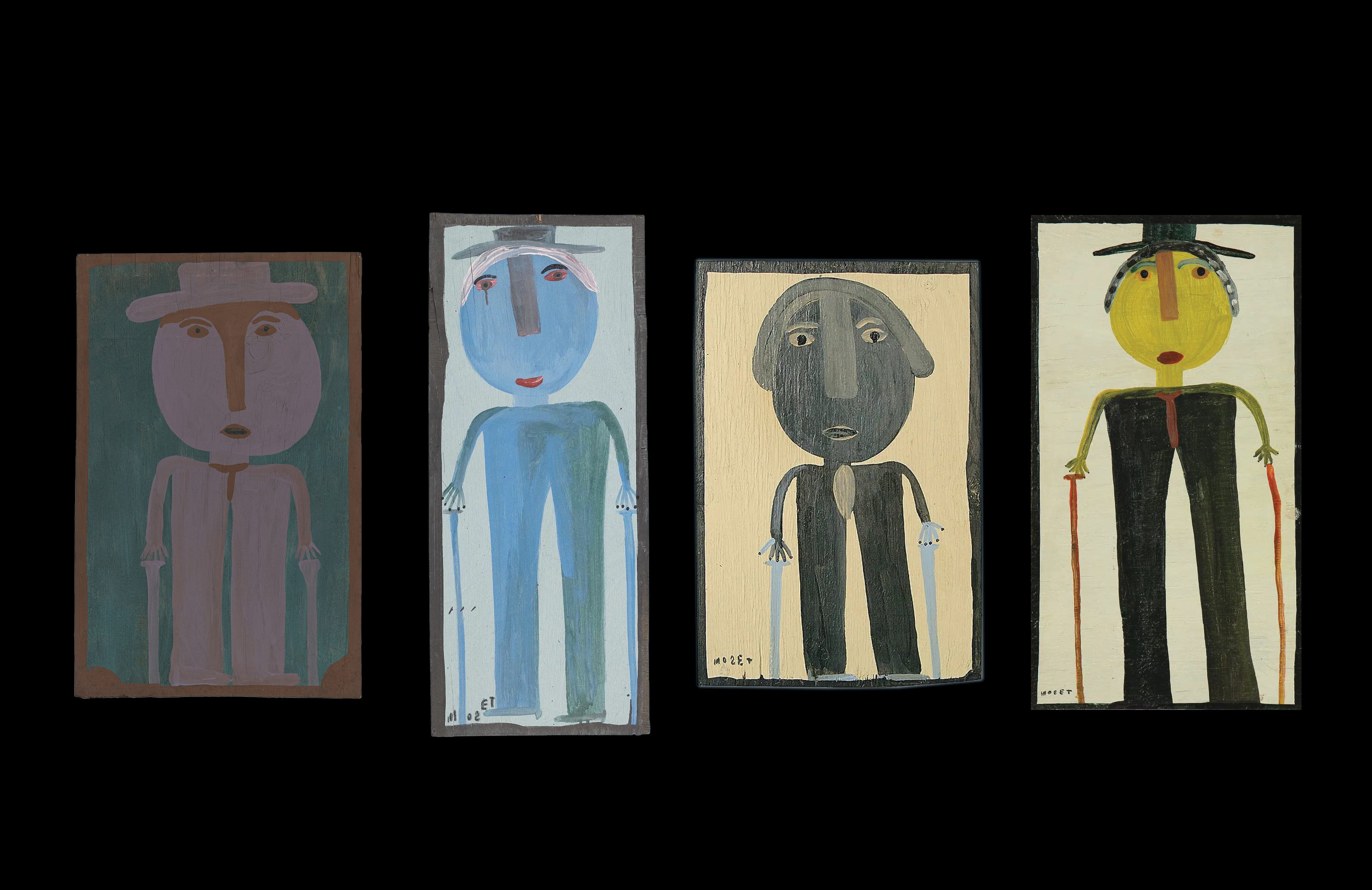
What began as something to do during recovery quietly became the work of his life—eventually finding its way into collections at institutions like the Metropolitan Museum of Art in New York and the Centre Pompidou in Paris.
That matters because, at first glance, the paintings can appear crude or almost childlike to people unfamiliar with self-taught art.
But the longer you look, the more you see.
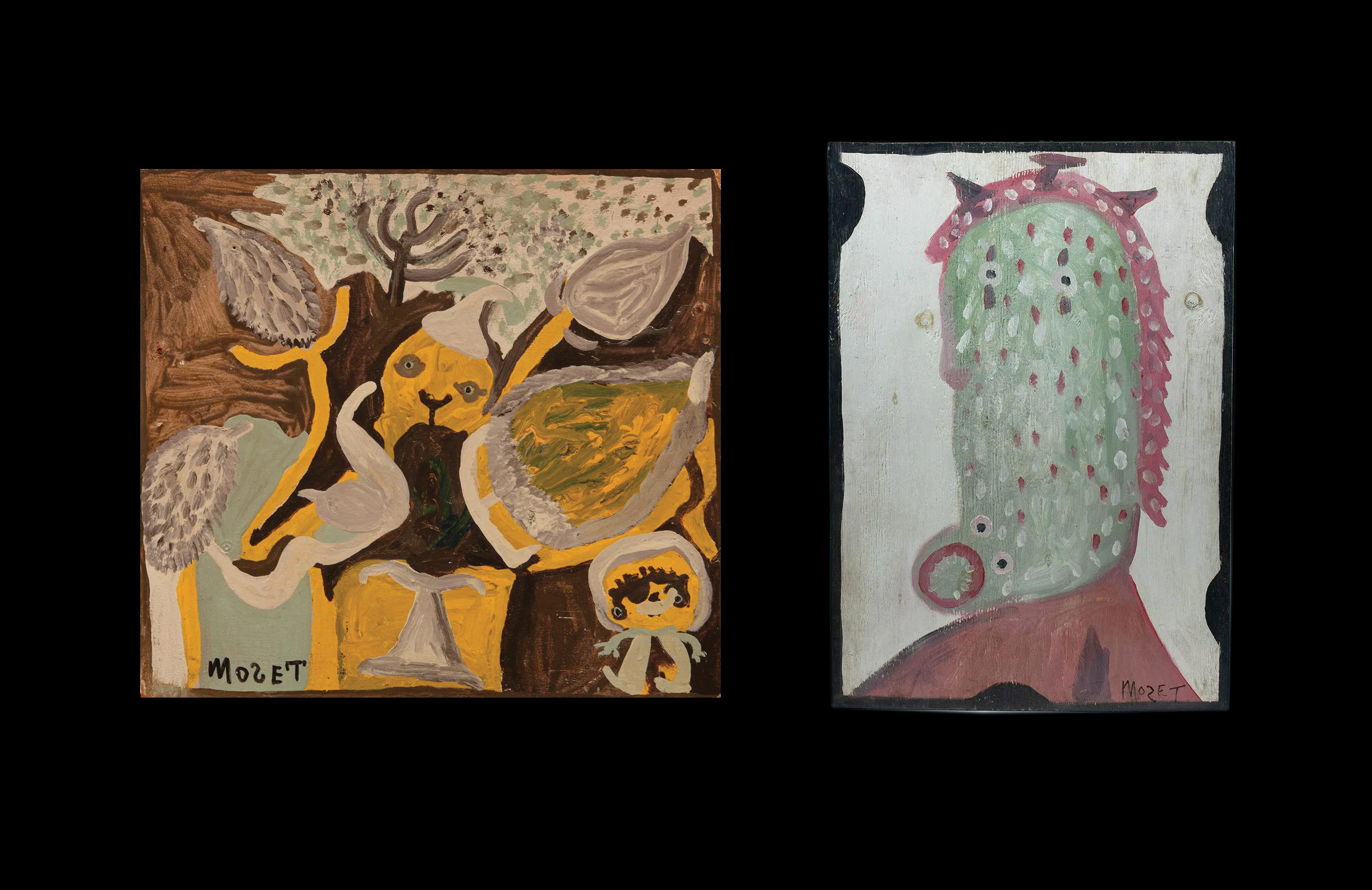
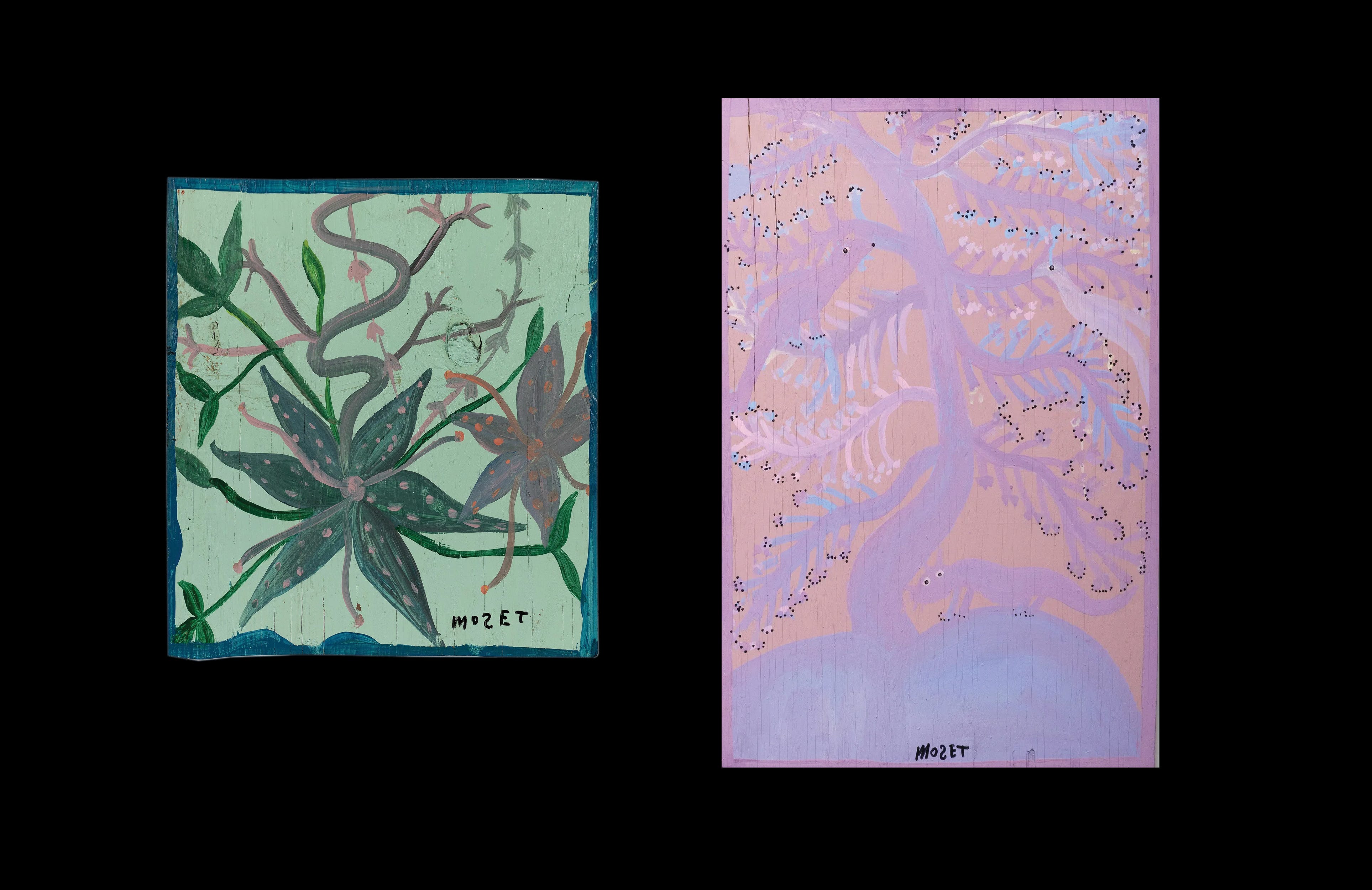
In Tolliver’s paintings, you can feel the joy of making everywhere—in the curves and flow of the shapes, the expressive, confident brushstrokes, and the compositions that activate the edges and push against the figures.
Everything is highly simplified, yet nothing feels reduced.
The color combinations can feel awkward at first—sometimes jarring, sometimes unexpectedly sophisticated—but they somehow resolve into something unmistakably personal.
That tension was exactly what made the paintings feel so alive and memorable.
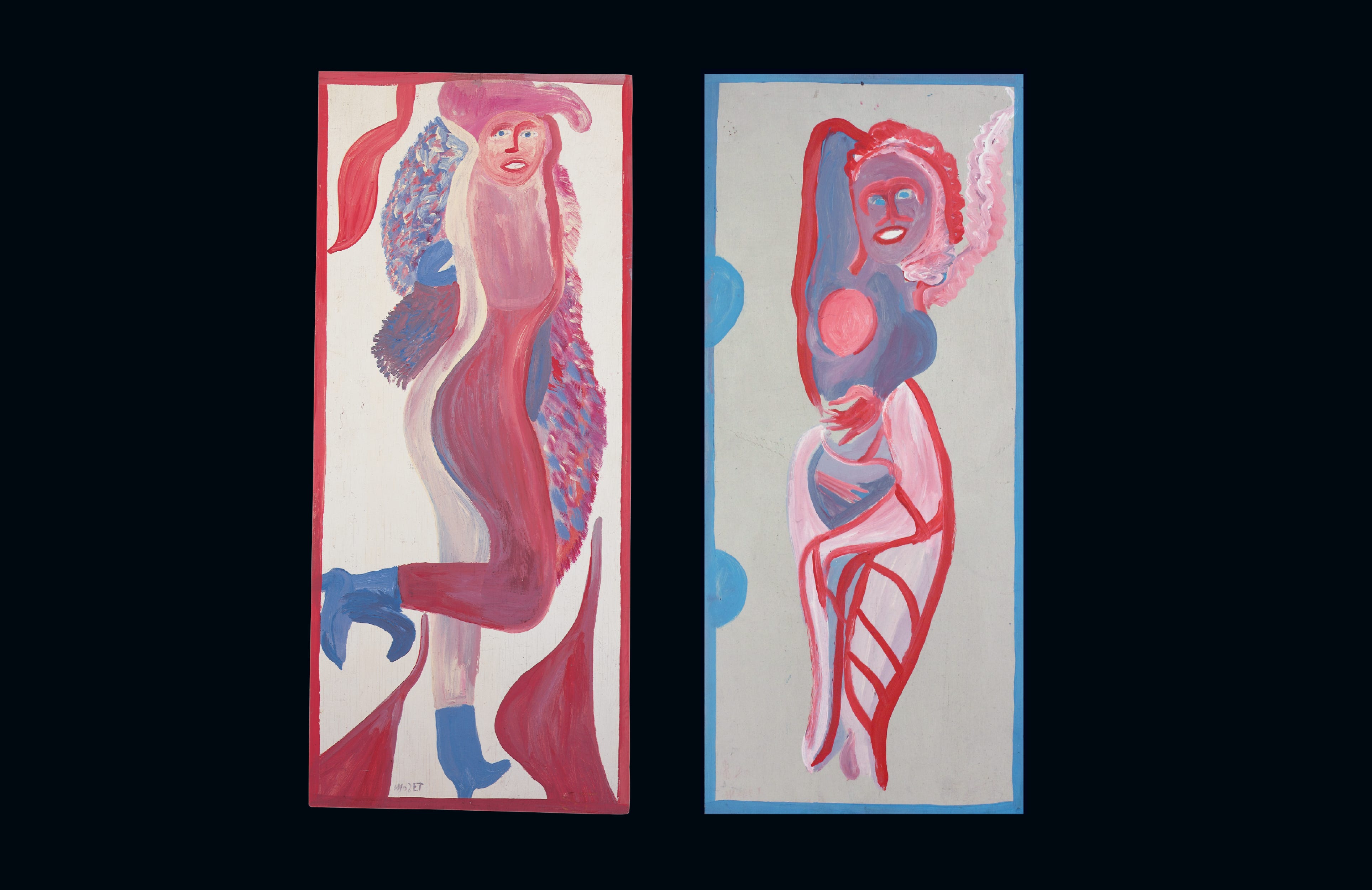
Years later, after collecting and living with Tolliver’s work, I noticed something even more revealing.
I acquired two rare paintings of “Calendar Girls”.
I was struck by what I assumed was Tolliver’s intentional choice of color—a stylistic use of red, white, and blue.
The more I learned about Mose Tolliver’s work, the more likely it seems that the unusual matching palette across multiple paintings was simply a reflection of the paint he had available at the time.
The palette wasn’t invented theoretically.
It emerged from constraint.
That realization stayed with me because design often works the same way.
Designers rarely begin with unlimited freedom.
We work inside constraints: existing brands, inherited systems, fixed formats, available typefaces, imperfect images, tight timelines, partial information.
And yet creative work still happens.
Words. Images. Typography. Color. Form.
The “materials” themselves are ordinary.
What changes is how we as designers see them—and what we imagine they could become.
Mose Tolliver didn’t wait for better conditions or more resources.
He worked with what he had available and transformed it into something unmistakably his own.
That’s the part I reflect on when I look at his paintings.
Creativity isn’t about having more. It’s about seeing more.

Tim: I love this! Thanks so much for sharing. Wendy PJ